

Guest Appearance: Mantis Boxing, BJJ, Self-Defense and heresy in martial arts (Ep31 - The Tai Chi Notebook Podcast).
Good Afternoon All, Back here in New England after spending a week at Martial Arts Studies Conference 2024 in Cardiff, UK. The conference was exceptional, but more on that later. For now, I’ll highlight one of the many outstanding encounters of the trip. I had the distinct pleasure this past week of meeting and sitting down with…
Good Afternoon All, Back here in New England after spending a week at the Martial Arts Studies Conference 2024 in Cardiff, UK. The conference was exceptional, but more on that later. For now, I’ll highlight one of the many outstanding encounters of the trip.
I had the distinct pleasure this past week of meeting Graham Barlow of The Tai Chi Notebook Podcast, and Blog. I had seen Graham’s blog a few years ago but never had the honor of meeting him. Graham is a long time practitioner of Chinese martial arts: Tai Chi and Choy Li Fut to name a couple. He then migrated as I did to Brazilian jiu-jitsu where he now spends his time teaching and sharing his passion with others.
Graham and I had tons to talk about, and the dialogue continued when opportunity arose between panels or at the end of the day. Without spoiling it, I’ll now introduce you to one such moment when Graham suddenly pulled out a recorder, and invited me to an impromptu podcast which he pulled off masterfully.
Enjoy the discussion, it goes in my bucket of favorite chats.
Ep31: Mantis Boxing, BJJ, Self-Defense and heresy in martial arts
The Tai Chi Notebook Podcast
For more good stuff from Graham
Find him on YouTube:
https://www.youtube.com/channel/UC1SJdsrGOYU45CFU9naMHHg/
Find his website and podcast:
http://www.thetaichinotebook.com/
Facebook:
@TaiChiNotebook

Summary Boxing Set - Training Course
My Mantis Boxing Set + Combat Techniques
Advance your skills, coordination, balance, reaction speed, and more.

Learn my Mantis Boxing
A friend of mine, another martial arts instructor, asked me a question a few years ago during a lengthy debate on ‘forms in martial arts and their efficacy’. A conversation we later recorded for everyone’s benefit.
He asked,
“if you die (I’m quite sure he was plotting to kill me), how will your students know what your methods, or system was?”
His argument was accompanied by a challenge to create my own form. A boxing set that represents all, or at least most, of my mantis boxing methods for all of you.
So I took my experience learning over 50 of these boxing forms early on in my training, and used this to lay the framework for my very own set. My Summary Boxing Set, or Zhāi Yào 摘要. Which literally means a summary.
This set is comprised of a wide variety techniques hailing from the 4 pillars of mantis boxing - strikes, kicks, throws, and submissions. Includes combinations & counters. Trips, takedowns, chokes, and locks. All methods that I use in sparring. Tested for years on my mats by me, and my students.
This is a perfect way for you to practice these techniques on your own, or with a partner and continue to advance your skills, coordination, balance, reaction speed, and more. Training your body to recognize and tweak these movement patterns (fighting techniques) so when it comes time to use them for real, your body is not stopping to ask your mind - “how do I move my arm, leg, etc to pull this off?”
Isn’t this Free?
Sneak peek of a few of the exciting mantis boxing moves you’ll learn in this course!
You may be asking yourself, “Didn’t you release this boxing set for free to the entire world on YouTube? What is the point of this course?”
Good question. One I would be asking in your shoes. The answer is simple.
Combat Applications!!!
Any martial art form, kata, taolu, boxing set in and of itself, is an empty shell. Without the functional component behind the parts and pieces inside the shell, it is nothing more than a nominally useful martial dance routine.
Know the WHAT, and WHY!
Inside this course you will not only learn my summary boxing set, you’ll see what the moves do in combative applications and how to apply them. In my experience, an invaluable treasure. A storehouse of knowledge for you to refer to as you train with me. Something I ‘never’ had in my years of training all manner of styles of Chinese boxing from a variety of teachers. In that time I only ever had one mantis boxing coach that carried form and fighting together under one roof.
A fact that may seem inconsequential to many of you whose first martial art experience was training with me, where your in-person classes are filled with drilling application with a partner, followed by sparring. This lexicon is something I believe you will come to appreciate over time and will help you to visualize what the moves do as you practice, or to train them with a partner and learn how to really use mantis boxing.
One last thing - I hope you enjoy this set as much as I did creating it for you.
Randy
*course included with Legacy Boxer and Supreme Ultimate Boxer memberships

The Plum Blossom Connection To Mantis Boxing
Praying Mantis Boxing (táng láng quán 螳螂拳) upon closer inspection, has a deeply rooted past that is intersected and conjoined with the plum boxing. There are a multitude of references in names of mantis boxing sets, movements within forms, and even branches of the mantis boxing style that split off from the main line and went on to brand themselves more specifically as plum blossom praying mantis boxing. It goes beyond mere symbolism. To understand this we have to…
Symbolism

Plum Blossom - logo design - Randy Brown - 2006
The plum flower (méi huā 梅花) is a prolific symbol in Chinese culture. The flower is one of the very few blossoms to appear in the early spring when snow is still a possibility. There are countless images in Chinese art culture depicting the plum blossom emerging through snow covered branches. The symbolism of this particular flower is powerful, a metaphor for ‘strength through adversity’, or ‘overcoming hardship’.
Upon close inspection, Praying Mantis Boxing (táng láng quán 螳螂拳), a style from Shandong province in northern China, has a deeply rooted past that intersected and conjoined with plum boxing, another popular style of the time and region. There are a multitude of references found within names of mantis boxing sets, specific movements within forms, and even branches/lines of the mantis boxing style that split off from the main line, going on to brand themselves as ‘plum blossom’ praying mantis boxing. This goes beyond mere symbolism and speaks to something greater. To understand this we have to delve deeper into the region, politics, and time period where the style originated, and discuss another style of boxing known as, Plum Boxing.
Plum Flower Boxing
Plum Flower Boxing (méi huā quán 梅花拳), or méi quán, is a folk style of boxing from the border regions of Jiangsu, Anhui, Shandong, Henan, and Hebei province in northern China. It began during the Qing dynasty, and by the collapse of the Qing in the early 1900’s, it had thousands of followers; although this description is rife with technicalities.
For one, the word styles is in question. In the early and mid Qing dynasty boxers rarely stayed with one teacher for any significant length of time. ‘Styles’ as a construct were few and far between outside of family units. A boxer’s repertoire was an amalgamation of techniques from various teachers and counterparts across the north China plains. Joseph W. Esherick writes of this in his book on the origins of what is commonly known as the Boxer Rebellion, which he more aptly describes as a series of ‘uprisings’.
As we get to the late Qing, when plum boxing is gaining in popularity, we see more styles begin to take significant roles in the Yellow River region in the 1860’s. Esherick notes,
Boxing was particularly popular in this area - both as recreation for young men, and as a means of protecting one’s home in an increasingly unstable countryside.
He also quotes a Linqing gazeteer. They said,
The local people like to practice the martial arts — especially to the west of Linqing. There are many schools: Shaolin, Plum Flower and Greater and Lesser Hong Boxing. Their weapons are spears, swords, staff and mace. They specialize in one technique and compete with one another.
Shaolin boxing was tied to the ‘bandit-monks’ as Chinese historian Peter Lorge describes them. Temple monks hired local ruffians and bandits to protect their land holdings and crops. They were monks only in title and appearance, but more accurately put — armed enforcers for the temple.
Red Boxing (Hong Quan) was the preferred boxing methods of security guards, escort masters, and family bodyguards in the northern provinces. Albeit this was not the style of origin for a bodyguard who began the 6 Harmony Praying Mantis Boxing line in the generations to follow.
Plum Flower Boxing has a variety of descriptions tied to it, all of them accurate in their own rights. The synopsis - a ‘style’ only in the loosest sense of the word. More accurately - a series of boxing methods used for self-defense, but more for exhibition in village marketplaces. It was named not for a style so much as the time of year these exhibitions normally took place — in early spring before the field work began. A period during which, spare time was more plentiful for the agrarian society, and the plum blossoms were appearing on the trees. The ‘plum boxers’ would arrive in the markets touting their skills. (Esherick, 1987)
Dr. Peter Lorge, a Chinese historian wrote
“many local styles [of Chinese martial arts] subsumed themselves under the rubric of Plum Blossom Boxing when it became famous [due to its association with the Boxer Rebellion] at the beginning of the twentieth century” (2012:208; see also Zhang and Green 2010)
Dr. Tom Green, and Dr. Zhang Guodong write extensively on the folk aspect of Mei Boxing in their research (Zhang and Green 2010) on the style, and its integration in local villages that survives even to today.
By the end of the 19th century plum boxing had thousands of practitioners. Shandong, the birthplace of mantis boxing, was replete with plum boxing practitioners, and the now known style was taught by one of the famous patriarchs and leader in the boxer uprisings - Zhao Sanduo. Esherick writes heavily on Zhao and his role with the rebellion. Ben Judkins follows up in great detail as well.
The significant point of immediate interest for our purposes, is to note the popularity of the style as well as its migratory nature. This was not simply limited to one small region in China. The style spread from village to village, city to city as the 1800’s progressed on towards the turn of the century. If we stick with the concept of styles being a construct of a series of techniques learned from multiple sources, or as Green puts it - “a common vernacular in the region”, then we can understand why one style or boxer, would absorb the methods of another so seamlessly. As with modern day martial arts, and the popularity of videos on fighting technique for almost any style you can think of - we practitioners seek out and use what works. Efficacy is at the forefront. This concept is not unique or exclusive to human beings in the 21st century, and it would be hubris to believe so. It would be especially present when dealing with violent and chaotic regions where your life and the life of your family depended on these skills, as existed during this time period.
The Collapsing Empire
Crane on a Snow-Laiden Plum Tree - ink on silk - Attributed to Lu Fu, second half of the 15th century -after 1505
There are questions as to the ‘true’ age of praying mantis boxing. For now we’ll assume that mantis boxing was an actual ‘style’ prior to the late 19th century.
Liang Xuexiang, the lineage holder in Shandong Province, China during the late Qing dynasty. Liang returned from Beijing in 1855 to his village in Laiyang county (Yushankuang) two days walk south of Yantai. At this time the region to the west of the village was in the fifth year of catastrophic flooding of the Yellow River. The Taiping Rebellion was raging in the south. The second Opium War, known as The Dart War would begin the following year in 1856.
Liang Xuexiang was a biaoshi (escort master) prior to retiring, and possibly a soldier in the Qing military (although I have yet to verify this with more than one source). I am told by another credible source that he was a silk merchant in Beijing prior to returning to his village. It is worthy of noting, according to Chircop-Reyes and his paper on Merchants, Brigands, and Escorts, a biaoshi was hired based on factors which included their martial arts lineage.
In 1875, Liang was in his mid 60’s when his life intersected with the next (4th) generation of mantis boxers. The boxers who would then go on to diverge the style from it’s core lineage, and propel it onto separate paths into the present day. Liang, with his experience as a biaoshi, may have been considered a village protector upon his return, or just passing the time in his later years teaching for fun.
During 1875, a majority of the Shandong province was gripped by severe drought that had begun two years prior in 1873, and was still ongoing. Four years of mass famine would follow this drought claiming the lives of 9.5 to 13 million people within five northern provinces of the north China plains which included Shandong. An estimated 8 to 12% of the population.
Opium was ravaging the populace, as well as continued western encroachment and pressure. Yantai was home to one of the treaty ports that was forced open by the western powers at the Treaty of Tianjin (1858) following the Dart War. The White Lotus Rebellion was off and on in the border regions of Shandong, and banditry was a significant problem in northwest and southwest of Shandong. Militias were growing in popularity to quell these threats.
The Qing rulers were meanwhile engrossed in fending off a multi-pronged attack on their rule from outside powers and internal rebellion, as well as corruption which all told, compromised their ability to maintain power. An economic fallout from the catastrophic floods, major rebellions fought in the south and the west that sapped their military strength; foreign powers beating down their door, and the eventual Japanese invasion during the Sino-Japanese war (1894-95). This invasion included battles in Shandong next door to Yantai, in Weihai Wei.
The Qing military at it’s apex was remarkably powerful and adept with the 8 banner armies of the Manchu. By this time however, they had become lazy and unkempt. The Green Banner army, comprised of Han Chinese, not Manchu bannermen, was now the leading force to deal with rebellions and fight off foreign incursions with any significant effect. The Qing military lacked technological advancement, and the western powers made short work of the Qing army in any altercation. Likewise, Japan during the Sino-Japanese war, sunk the much larger Chinese fleet in its entirety in a single day.
The intrusion of Catholic and Protestant missionaries, their willfulness at not only converting villagers, but influencing the political establishment, caused a growing resentment toward these religions, their leaders, and their followers alike. Thus was the climate of Shandong during the 1800’s as Plum Blossom Boxing spread, and mantis boxing was branded.
The rise of Méi Huā Quan
As mentioned, méi quan was the name of a growing martial art in northern China well before and during the lives of the 4th generation of mantis boxers that followed Liang Xuexiang. Liang is noted as training under Zhao Zhu, who trained under Li Bingxiao - known as ‘two hooks Li’, the likely progenitor of the mantis boxing lineage around the turn of the 19th century, if there was one. His existence is difficult to verify, and his name has questionable translations.
Those who would become the fourth generation of mantis boxers, to teach others, were the following: Liang Jingchuan (Liang’s son), Jiang Hualong, Song Zide, Sun Yuanchang, and Hao Lianru. They were all friends with one another in Yantai.
How were these boxers tied to Liang Xuexiang? They are claimed in the mantis oral records as being students of Liang. Upon deeper inspection though, this is a more difficult question to answer. At the time they met Liang they were the following ages: Hao was still a child at 11 years old. Jiang and Song were 20 years old; both had experience in other boxing styles prior to meeting and ‘training’ with Liang, according to their biographies.
Is it possible Jiang and Song, and the other boxers their age, were in Liang’s employ as escort guards rather than martial arts students? That is, if Liang was still operating as a security boss at this time. There is no known evidence of when Liang ended his service in this career so this is difficult to answer.
Another possibility is, they were bodyguards for Liang and his family, who was now in his 60’s during an extremely chaotic time in Shandong. One experienced in the field of protective services would certainly recognize the need for such in times of strife.
Militias were also becoming more and more commonplace in Shandong due to the growing criminal activity. Was this group a militia? Was their symbol the mantis? Was Liang the militia leader? He was a respected escort-master who may well have been looked to as a local leader. More questions, few answers.
Another question, were they a gang of hoodlums brought together by ill circumstances to bully and harass others? Asserting their will over those weaker than themselves? This last part is doubtful due to Song, and another friend of theirs, Wang Rongsheng, being from wealthy families.
Perhaps, during the height of a major catastrophic event, and surrounded by a collapsing dynasty, Liang was simply teaching martial arts to this next generation for a hobby? Silly, when we lay it out that way, but entirely possible.
We have no definitive reason why any of these boxers, with the exception of Wang Rongsheng came to claim Liang as their teacher. We can however look at the obvious connection to the plum blossom society, and how this popular boxing wave came to influence mantis boxing as it progressed toward the 1900’s. Possibly determining when praying mantis boxing began to change.
The Boxer Uprisings
Plum blossom boxing was highly popularized by the time these 5 boxers were in their 30’s and 40’s. The style was also directly, or indirectly tied to the Boxer Uprisings many years later. According to Dr. Peter Lorge, and Dr. Tom Green, méihuāquan was a popular style, or group of martial artists of the time, which also held a folk religious element along with it.
Plum blossom boxing was spread through marketplaces when their followers/practitioners visiting villages and cities in the northern regions of China. Said boxers would meet up with other martial artists and share techniques in a cross collaboration. The art spread through various provinces such as - Henan, Hebei, and Shandong [Green 2016].
Dr. Ben Judkins mentions these plum boxers in his extensive writings on Martial Arts as Brand. Judkins writes, “Talent attracts talent.” which could help explain why these younger, accomplished boxers with prior experience in other styles, ended up tied by lineage, to two biaoshi (escort masters) that came before them - Li San Jian, and Liang Xuexiang.
Judkins further writes -
“However it would appear that there have been numerous cases where local martial artists wished to capitalize on the marking[sic] power of the dominant style or “brand” but for one reason or another could not officially enter the new institution or retrain. The very rapid spread of Plum Blossom Boxing across northern China in the late 18th and 19th century is a good example of this.
Members of this style, sometimes associated with millennial folk religious movements, were a common fixture on training grounds and at village markets in a number of northern provinces. Today there are a very large number of “alternate lineages” within the Plum Blossom tradition, some of which share more commonalities than others. Practitioners of the art occasionally point to this proliferation of clans as evidence of the great age of the art. However, we actually have some good documentation on the history of this particular style.
It appears that in the second half of the 19th century a relatively large number of small local fighting styles, some of them more closely related than others, started to declare themselves “Plum Blossom” schools by fiat, essentially appropriating what was a regionally very successful brand, without having to totally overhaul their teaching structures. In this way the total number of unique local styles in the region was reduced, and the relationship between the name “Plum Blossom” and any fixed body of techniques was stretched and twisted”
Jiang Hua Long and his friend Song Zi De were the first to claim the moniker of the plum blossom, branding the style as ‘Plum Blossom’ Praying Mantis Boxing. Hao Lian Ru was the blood brother of Liang’s son, Liang Jingchuan, who was much older than him and the 1st disciple of Liang Xue Xiang. Hao later went on to distinguish his line of mantis as something different than the others - Tài Jí Méi Huā Táng Láng Quán, or ‘Supreme Ultimate Plum Blossom’ Praying Mantis Boxing.
Tai Ji is oft used as a way to define something as ‘the source of all things’. This was likely a way for Hao to declare (or brand) that he was in fact the 1st of Liang’s disciples. The closest to the core. However, when this happened is debatable. Such political pettiness is likely to have happened after Liang Xuexiang’s death in 1895 at 85 years old.
If Lorge is correct that much of the plum blossom moniker came after the Boxer Rebellion, then we can narrow this down to sometime after 1902. If Liang Xuexiang was the bearer of the mantis torch prior to all of these boxers, and it was not a brand invented after his passing, then it is likely the plum blossom blend of techniques also did not appear until after his passing, and after the boxer uprisings.
The references to the plum blossom go deeper as we explore a few of the mantis boxing tào lù (forms, or choreographed boxing sets). Although this is subject to debate, these boxing sets are the commonly believed ‘older’ sets from mantis boxing. They exist in all of the main lines with the exception of 6 harmony mantis, which came later in the 5th generation by conjoining with a different boxing style altogether (Liuhe).
Mantis Boxing Sets - Tào Lù
A note on these boxing sets before we establish their plum blossom connection. The common forms that exist between the lines of — plum blossom praying mantis boxing, supreme ultimate praying mantis boxing, and qī xīng (Seven Star 七星) praying mantis boxing, are all different from one another in execution. None of them have the same moves/patterns within the choreographed set of fighting moves. This makes it next to impossible to tell which version is ‘correct’, or an original, and further solidifies the fact that boxing techniques and styles of the time, were fluid.
We can however rule out seven star mantis as being the original, since Wang Rongsheng never studied under Liang Xuexiang. Wang’s claimed teacher, Li Sanjian practiced Red Boxing (Hong Quan), not mantis boxing. Li San Jian was in his 70’s in 1888 when Wang started training with him, and died a few years later in 1891. So it is difficult to assess how much ‘knowledge’ was transferred to Wang from Li in that time, and if fighting was the true nature of their relationship.
It is also important to note that Wang was from a wealthy family, and thereby did martial arts as a hobby rather than as means of employ. Li San Jian however, was a famous fighter and biaoshi. Wang, also ‘purchased’ his degree in the 1890’s (a common form of corruption taking place at this time due to the imperial examination system being extremely difficult to pass). Wang failed the exams three times previous to purchasing his degree. Wang, and his family quite possibly hired Li Sanjian for his protection services/knowledge, and Wang could have studied with him during this time. But their relationship is unknown to us, and not relevant to our current, and further exploration of the plum blossom connection to mantis.
Ultimately, finding the original quickly narrows down to — Plum Blossom Praying Mantis (Jiang and Song), Tai Ji Mantis (Sun Yuanchang), or Tai Ji Plum Blossom Praying Mantis (Hao Lianru). Perhaps Hao and Sun’s ‘taiji' mantis is closer to the true mantis, if there ever was such a thing. Or, at least closest to Liang Xuexiang’s teachings? Perhaps this is why they named branded it with the taiji? As in ‘closest to the source’.
The fact that the forms (taolu) from each of them is also different, tells us that even within this ‘style’ of mantis boxing, the forms were subject to independent interpretation rather than a dogmatic system of practice. Due to the appearance and consistency of all three of the core boxing sets (albeit executed differently from one another) in ‘seven star’, ‘taiji’ and ‘plum blossom’ lines of mantis boxing, allows us to trace the forms Luán Jié (Intercept 攔截), Bā Zhǒu (8 Elbow 八肘), and Beng Bu (Crushing Step 崩步) at least as far back as this 4th generation of boxers.
I have no known record of who created these forms at the time of this writing. There is uncorroborated claims that Liang Xuexiang wrote three manuscripts and listed some of these sets within. Until I can verify that, it is unsubstantiated. We may never know.
Because these boxing sets show up in plum blossom praying mantis, supreme ultimate praying mantis, and seven star praying mantis, we can conclude that they either a) existed prior to this generation, and were taught by Liang Xuexiang, or b) were created by this generation and spread down each branch from there; each style having different versions of the form based on the boxer teaching it. Having no verifiable written records makes it difficult to pin down an absolute origin, but it is important to note Esherick’s writings again here as a refresher - ‘boxers and their methods were more fluid and subject to variation from boxer to boxer.’
Wang Rongsheng, the founder of the seven star praying mantis branch was close friends with the ‘plum blossom’ praying mantis boxing founders, and around the same age. Wang assuredly learned mantis boxing from these boxers, his friends, since he did not learn it from Li San Jian. This we can discern from a close study of our mantis boxing timeline, and exactly when he is noted as meeting his claimed teacher, Li San Jian.
Since the boxing sets Crushing Step, Intercept, and 8 Elbows are often the topic of discussion when it comes to ‘original forms’, I’ll focus on these in more detail while additionally notating other forms that offer significant points of interest, if in name only.
Note: These observations are based on the versions of the form(s) that I learned and witnessed via other boxers. Mantis forms are ripe with variations from one line to the next, even at times within the same branch/line. Thus making it extremely difficult to make any statements in absolute terms.
Lán Jié (Intercept 攔截)

The same double block is found in Gongliquan.
The version of Lán Jié that I learned, as well as others I see out there, is precipitated by a strange movement pattern performed in the air. This pattern makes little sense out of context, but the pattern in the air is clearly a plum flower. An homage to plum blossom boxing and a strong indication that this set was assembled by this 4th generation of boxers, or at least this was tacked on.
The opening move of the form that follows the salutation is synonymous with a version of the plum blossom boxing set -> double rising hooks followed by double palms/waist chop. This is the same opening move of the plum blossom form/boxing set that still exists today. Instead of hooks (another brand as I discuss in The Mantis Hand was nothing more than a Mantis Brand) the plum blossom version uses two upper blocks with fists. Similar to gongliquan (power building boxing).
By itself one could argue that this was just a technique that was common to the region at the time. However, when placed immediately after the opening symbolism and combined with other factors that follow, it stands to reason that it came from plum boxing rather than the other way around.
Other common techniques overlap with plum boxing as well: crashing tide, closing door kick, recede/block/kick, block/circle/trap strike, seize leg, lifting hook to the topple, and more. All show a) there was a common vernacular, or library of techniques, (see What Can BJJ Teach Us About Qing Dynasty Martial Arts? - Randy Brown - MAS Conference 2019) in the region at the time, and b) given the redundancy of these two sets and plum boxings popularity compared to mantis, that Lán Jié was likely created after the plum blossom boxing craze.
Given the heavy influence and symbolism of plum boxing within this set, it is far more likely this form was created or altered after the boxer uprising when forms proliferation truly began. However, this is difficult to know for sure without documented dates of creation. Another commonality with this set as well as other mantis sets like crushing step, and others (yet not Ba Zhou), is the repeated engarde position found in the meihuaquan (see photo).


Bēng Bù (Crushing Step 崩步)
Bēng Bù (Crushing Step 崩步) is a prevalent tào lù (boxing set 套路) of praying mantis boxing. It stands as one of the more popular fighting sets on record for the style. It is also a common boxing set practiced by a few of the branches. Although the name translates as 'Crushing Step', this is a bit of a misnomer.
This form also embodies the influence of plum blossom boxing. The ‘engarde’ position known as ‘mantis catches cicada’ shows up in bēng bù right at the beginning — second move. In Crushing Step as well as in other mantis sets, this engarde position is branded with the mantis hooks instead of the signature open palms found in plum blossom boxing as seen above. This clearly disrupts the idea that this was a combative move in and of itself. A heart crushing blow to many of us who spent great efforts trying to ‘decipher’ the fighting application of that move.
In the end, it is nothing more than a branded engarde position taken from plum blossom boxing. It could also be commonly used by boxers from varying styles accustomed to duels at the time. Although, in my experience with studying over 50 forms from a variety of northern Chinese boxing styles, it does not appear that often in other sets/styles.
Additionally, the end of Crushing Step, and Intercept, both have a 180 degree turn to this ‘mantis catches cicada position, or engarde with hooks. The plum boxing set ends with the exact same 180 degree turn, the exception being the use of open palms vs hooks.
The Tiger Tail Kick
Plum Flower Maiden Dancing from Pole to Pole. Circa 1880. Source: Wikimedia (though I believe that Stanley Henning was the first person to publish this image in his essay for Green and Svinth.)
At the end of the first road of bēng bù, there is a move often referred to as a ‘tiger tail kick’. There are versions of crushing step with one instance of this move as you start the second road, and other variations end the first road with this move, and then repeat it in the opposite direction before heading into the second road of the form. Regardless, its roots lie in plum boxing.
Thanks to another article done by Ben Judkins on his Kung Fu Tea blog, I found a drawing of this exact same move. The article - “Research Notes: “Background of Meihuaquan’s Development During Ming and Qing Dynasties” By Zhang Guodong and Li Yun” discusses the influence meihuaquan had on the area of Shandong during the late 1800’s. This same ‘tiger tail kick’ move, as seen in the drawing from 1880, is inside the meihuaquan forms as well as Crushing Step.
This influence on a staple mantis boxing form such as bēng bù draws into question the age of the form, and perhaps points to a newer origin story for this boxing set thought to be at one time over a thousand years old.
Bā Zhǒu (8 Elbows 八肘)
Bā Zhǒu is claimed to be one of the older sets in the lineage. By outward appearance, although mutated from line to line, it seems to be one of the only forms consistent among seven star, supreme ultimate plum blossom, and plum blossom mantis. It would therefore hint that this form [whichever version is original], is handed down by Liang Xue Xiang, and perhaps those before him.
Additionally, and perhaps more significantly — in review of the various versions of this form ascribed to the different branches of mantis boxing, there is a distinct lack of the ‘plum blossom influence’ in the set unlike crushing step, and intercept. In a closer look at this 4th generation of boxers when they fractured into separate lines, based on this evidence it is highly likely in my opinion that this is the oldest mantis boxing set.
Bēng bù and lán jié are suspicious when we see the heavy plum blossom boxing influence represented within them. In both seven star, and plum blossom mantis boxing lines. This can further be brought into question as we look to what other significant geopolitical factors took place in this region/time period.
Rebel Boxers
These plum boxers were subsequently connected to the Boxer Uprisings as we travel closer to the turn of the century. Zhao San Duo, a famous plum boxer and rebel of the time, they were connected to the uprisings not necessarily in ways that would seem obvious. Judkins writes regarding the plum boxers/sect in his article on Zhao San Duo, “the group expelled anti-Christian, and anti-Qing extremist factions.” They were, as well as other martial artists of the time, called upon to engage as a militia group in times of need.
However, Judkins cites the work of Joseph Esherick on the Boxer Uprisings and goes on to further mention the following specifically about Zhao San Duo -
“Esherick reports one very interesting example of “image policing” in his discussion of the relationship between Plum Blossom boxing and the aftermath of an outbreak of anti-Christian violence in 1897 (The Origins of the Boxer Uprising. California UP, 1985. pp. 151-159.).
Zhao San-duo was a noted local Plum Blossom teacher who had a few thousand students and disciples (including many yamen clerks and secretaries) in the Liyuantun region of Shandong. He was probably not a wealthy individual, but his father was a degree holder and he seems to have had some amount of local influence. While he initially resisted being caught up in local events, he ultimately could not withstand the demands to back his fiends and students in the face of persistent communal violence.
During the spring of 1897 he was effectively pressured by his students to become involved in a dispute between the local community and the area’s Christian population. A church (still under construction) was attacked, homes were looted and many people were injured in the clash (one person was reported to have been killed). The Christians were effectively driven out of the local community and the site of their former church was reallocated as a village school.
This action was well received locally and local officials were sympathetic to Zhao and his cause. However, from that point forward he increasingly aligned himself with radical (and sometimes even anti-Manchu) figures. This trend worried the other elders of the local Plum Blossom clan. They did not want to be associated with community violence, anti-Christian violence or even the suggestion of sedition.
These elders met repeatedly with Zhao. However, when it was clear that he would not change his path they agreed to part ways, but forbade him to teach or practice under their name. In effect, worried about the damage and disgrace that he would bring to a very successful brand, the Plum Blossom clan excommunicated the increasingly revolutionary Zhao.
He selected a new name for his style, the Yi-he Quan (Boxers United in Righteousness). This should sound very familiar to students of late 19th century Chinese history. Just as the elders feared, the subsequent actions of the Yi-he students in the Boxer Uprising severely damaged the fortunes of martial artists around the country.
The above is a significant indicator as to not only the popularity of plum blossom boxing at the time, with Zhao having “a few thousand students”, but what would ultimately also come to affect our mantis boxers in Shandong.
We see not only the influence of plum boxing on mantis boxing, but this further evolves into a new intersection with the Boxer Uprisings and the political leanings of at least one of our boxers. As the Righteous Harmonious Boxers as they were called, grew in popularity, so too did their influence on Jiang Hualong. Was Jiang involved in the uprisings? Or was he just an admirer of how they stood up to the western powers who were forcing their way into China, and specifically Shandong? Or was Jiang a supporter of the yi-he boxing movements anti-Christian agenda?
The following forms are noteworthy due not only to their connection to the plum blossom, but the boxer uprisings as well. Whether this is due to religious, cultural, or rebellious reasons is unknown, but it offers further evidence of our boxers being influenced or connected with meihuaquan.
Plum Blossom Fist - creator unknown
Plum Blossom Road (Meihua Lu) - Jiang and Song
Righteous Harmonious Fist - Jiang Hualong
Flower Arranging - Wang Rongsheng
Double Flower Arranging - Wang Rongsheng’s forms
Of particular interest is Jiang Hualong’s set - Righteous Harmonious Fist. According to Brian Kennedy and Elizabeth Guo in their book ‘Jing Wu The School That Transformed Kung Fu’, any association with the boxers involved in the Boxer Uprisings in the early twentieth century would have been considered detrimental to one’s reputation. While we have no record of what year this form was created, if it were prior to the reformation period and the creation of Jing Wu, it raises an interesting question as to why Jiang would keep the name, given any association with the Rebel Boxers was perceived as negative.
Jiang died at the age of sixty-nine in 1924 during a period when Jing Wu was battling the disparaged reputation of Chinese martial arts, and attempting to shed negative associations and convince the public that any black marks such as the boxer rebellion, outlaws, bandits, and overzealous warlords of the past, were not the true martial arts of China. Whatever was going on in the mantis boxing sub-culture in the early 1900’s, it did not affect Jiang Hualong enough for him to shed the name of his set and associations it may conjure in the minds of the public. This could lead us to believe he had strong associations himself with the boxer uprisings, their charter, or anti-western opinions.
Conclusion - A chronology of strife
If we look at the ages of our boxers and the regional and political conflicts they intersected with, we can begin to see a pattern evolve. These boxers met Liang Xuexiang as young adults and became branded as ‘mantis boxers’. Perhaps they were attracted to him due to Liang’s status and reputation carried from years of running escorts/bodyguard services. Liang’s reputation appears to be significant at least in his village/county.
Liang’s home in Laiyang/Haiyang is now a nationally protected treasure. The village sees visitors from around the world that come to see Liang Xuexiang’s dwelling and grave site, and to meet his descendants.
Liang Xuexiang’s house/courtyard. 2020 - https://kuaibao.qq.com/s/20200103A0GKCS00
After meeting Liang Xuexiang our boxers experience (in chronological order)
Continued western encroachment in Yantai, and across Shandong
Catholic and Protestant interference in politics on a macro and micro level causing great upset in the populace of Shandong.
An opioid epidemic - by the 1890’s the once proud and famous Manchu Bannermen that were some of the strongest military in the world, were now reduced to corrupt drug addicts.
Drought across the plains wiping out crops for years to follow.
Mass famine following the droughts
Another famine
Japanese invasion/war on the Shandong peninsula.
Another famine
Boxer uprisings
National restrengthening movement
Collapse of the last remaining dynasty in China’s history
As our mantis boxers age they likely pick up the plum blossom banner to become part of the growing popularity of this quasi-religious movement. And yet in aligning with this banner, do not discard the mantis boxing brand. This could indicate the power of the mantis brand handed down by Liang, or his influence alone. The mantis was obviously a valuable enough symbol to our boxers that they continued to carry this banner as they adopted new branding and grew their influence in Shandong and beyond.
As we reach the end of the 19th century we see rebellious factions appear. One of our boxers is somehow directly or indirectly linked to the more extremist part of the plum blossom society, the yi he boxers who are ultimately exiled for their actions against Christians and converts. Was Jiang Hualong the one naming forms afters these boxers and their movement a part of uprisings? Further study of Jiang Hualong is required to try and answer this question.
Once the Qing dynasty collapsed we are now in a time period where martial arts in China undergoes a significant reskin. No longer a fighting art, now a form of physical education. Teachers vie for commercial students, popularity, reputation. Mantis boxing is propelled on a path to become a worldwide martial art as it travels south to Shanghai and enters the now infamous - Jin Woo Athletic Center to become a part of China’s national movement to regain face. From there to Hong Kong and half a century later it traverses the globe.
This southern migration was spearheaded by a student of a student to mantis boxer Wang Rongsheng who started the Seven Star line of mantis boxing. This 3rd generation ‘seven star’ student was Luo Guangyu. This lends itself to yet another question — Wang was not part of the original group mentioned above who trained with Liang. Yet his mantis, not the mantis of those who studied under the direct descendant was the branch/style (Seven Star) chosen to go south and represent these mantis boxers from the north. Why?
Wang’s version of mantis also carries with it hallmarks of the plum blossom boxing style. It is therefore conclusive that this integration with mei boxing took place before mantis reached Jin Woo in 1913. Due to none of the orginal sets matching from one branch to the next, it is difficult to ascertain an exact point in time when these two ‘styles’ converged. Quite possibly it was even before Wang adopted the mantis brand from his friends.
Bibliography
Esherick, Joseph W. The Origins of the Boxer Uprising. University of California Press, 1987
Lorge, Peter. Chinese Martial Arts from Antiquity to the Twenty-First Century. Cambridge University Press, 2011.
Guodong, Zhang & Green, Thomas & Gutiérrez-García, Carlos. (2016). Rural Community, Group Identity and Martial Arts: Social Foundation of Meihuaquan. Ido Movement for Culture. 16. 18-29. 10.14589/ido.16.1.3.
Judkins, Ben. Lives of Chinese Martial Artists (13): Zhao San-duo—19th Century Plum Flower Master and Reluctant Rebel - https://chinesemartialstudies.com/2017/04/20/lives-of-chinese-martial-artists-13-zhao-san-duo-19th-century-plum-flower-master-and-reluctant-rebel-2/
Guodong, Zhang & Green, Thomas (2018). “I Am the Greatest Boxer”: Articulating Group Identity through Chinese Folk Drama - https://www.researchgate.net/publication/326005437_I_Am_the_Greatest_Boxer_Articulating_Group_Identity_through_Chinese_Folk_Drama
Research Notes: “Background of Meihuaquan’s Development During Ming and Qing Dynasties” By Zhang Guodong and Li Yun - https://chinesemartialstudies.com/2015/06/01/research-notes-background-of-meihuaquans-development-during-ming-and-qing-dynasties-by-zhang-guodong-and-li-yun/
Kennedy, Brian, Guo, Elizabeth Jing Wu The School That Transformed Kung Fu, Blue Snake Books 2010

Crushing Step (Bēng Bù)
Last week kicked off the new course I’m teaching on the mantis boxing set known as Crushing Step. Each week in live stream classes I’ll be taking you step-by-step through the fighting applications of this old boxing set; thought to be one of the originals of the style.
Join me as I give you an in-depth view of how these striking, kicking, and takedown applications work, and how to practice each move on your own.

Crushing step is a mantis boxing sequence of hand-to-hand combat moves that is all too often handed down without the fighting applications included (empty shell). Or, the set is taught with ineffective fighting methods that do not function when pressure tested against even the most novice resistant, non-compliant partner, never mind a highly trained martial artist.
In this course I’ll be taking you step-by-step through not only the boxing set known as crushing step, but the self-defense applications of each move. Striking, kicking and grappling methods that have been resistance tested in a crucible of live sparring by myself and my students for years.
Whether you are already a mantis boxer that previously learned this set, but lack the fighting applications that go along with it, or a beginner boxer looking for a functional form of martial arts and self-defense, this course will fulfill your goals.
Join me as I give you an in-depth view of how these striking, kicking, and takedown applications work, and how to practice each of the moves on your own, or with a partner.
More on Crushing Step…
Bēng Bù (Crushing Step 崩步) is a prevalent tào lù (form 套路) of tángláng quán. It stands as one of the more popular fighting sets on record for the mantis boxing style, and is a commonality between a many of the branches of mantis boxing after it split during the turn of the 19th to 20th century.
Although the name translates as 'Crushing Step', this is a bit of a misnomer. Bēng means - ‘to collapse and fall into ruin’. Rather than an actual crushing ‘step’, Bēng Bù is more specifically about the ‘steps to Bēng’. The set is a series of techniques leading to the ‘collapse and fall into ruin’ of our opponent. This can be represented at times with single moves in the form such as crazy ghost fist, but there are many interconnected sequences of techniques as well. A series of counters to counters, ultimately leading to the enemies collapse. Think about Rule of Three from our 12 boxer principles.
While execution and power generation of a bēng dǎ (crushing strike 崩打) is riddled throughout the set, the overarching theme is…
Complete Course Releasing Soon

The Origins of Wang Lang of Tángláng Quán - 螳螂拳
Wang Lang (王朗) was a military folk hero/warlord in the Eastern Han dynasty (25CE - 220CE). Born in Tancheng County in the south of Shandong near the border of Jiangsu province. Wang Lang’s deeds are recorded and as with other famous figures in Chinese history, Wang was later memorialized and embellished upon in a famous novel Romance of the Three Kingdoms. How did Wang Lang become entwined with the history of Praying Mantis Boxing (Tángláng Quán - 螳螂拳) almost 2 millenia later? Is this the same Wang Lang, or was there someone else who founded this boxing style who went by the same name?
Wang Lang (王朗) was a military folk hero/warlord in the Eastern Han dynasty (25CE - 220CE). Born in Tancheng County in the south of Shandong near the border of Jiangsu province. Wang Lang’s deeds are recorded and as with other famous figures in Chinese history, Wang was later memorialized and embellished upon in a famous novel Romance of the Three Kingdoms.

Sacrificing to heaven and earth, the oath at the peach garden, Romance of the Three Kingdoms/Chapter 1 - An illustration of the book - From a Ming Dynasty edition of the Romance of the Three Kingdoms (金陵萬卷樓刊本) , 1591 - the original is kept in the library holdings of Peking University 1591
Wang’s bio according to Chine.de - An Encyclopaedia on Chinese History, Literature and Art
Wang Lang 王朗 (died 228 CE) courtesy name Jingxing 景興, was a high minister and Confucian scholar of the early years of the Wei period. He came from Tan 郯 in the commandery of Donghai 東海 (today's Tancheng 郯城, Shandong) and was, as proficient in the Confucian Classics, appointed gentleman of the interior (langzhong 郎中), then magistrate of Ziqiu 菑丘. In the turmoils of the Yellow Turban rebellion 黃巾起義 he became a follower of the warlord Tao Qian 陶謙, who promoted his appointment as governor (taishou 太守) of the commandery of Guiji 會稽. This region was contested, and Wang Lang had to ward off the warlord Sun Ce 孫策. The warlord Cao Cao 曹操 therefore decided to offer him the post of Grand Master of Remonstrance (jianyi dafu 諫議大夫), and made him concurrently military administrator of the Ministry of Works (can sikong junshi 參司空軍事). When Cao Cao, as factual regent of the empire, was made king of Wei 魏, Wang Lang was made governor of Weijun 魏郡 and "military libationer" (? jun jijiu 軍祭酒), later promoted to Chamberlain for the Palace Revenues (shaofu 少府), Chamberlain for Ceremonials (fengchang 奉常) and Chamberlain for Law Enforcement (dali 大理). When Cao Pi 曹丕 (Emperor Wen of Wei 魏文帝, r. 220-226) assumed the title of emperor, Wang Lang was appointed Censor-in-chief (yushi dafu 御史大夫) and given the title of neighbourhood marquis of Anling 安陵亭侯. Somewhat later he was made Minister of Works (sikong 司空) and promoted to Marquis of Leping Village 樂平鄉侯. Emperor Ming 魏明帝 (r. 226-239 CE) conferred upon him the title of Marquis of Lanling 蘭陵侯 and appointed him Minister of Education (situ 司徒). His posthumous title was Marquis Cheng 蘭陵成侯. Wang Lang wrote commentaries to the Classics Chunqiu 春秋, Xiaojing 孝經 and Zhouguan 周官 (Zhouli 周禮), and wrote numerous memorials to the throne. Most of his writings are lost.
Sources: Zhang Shunhui 張舜徽 (ed. 1992), Sanguozhi cidian 三國志辭典 (Jinan: Shandong jiaoyu chubanshe), p. 36. Ulrich Theobald Copyright 2016
In Romance of the Three Kingdoms Wang Lang
In the 14th-century historical novel Romance of the Three Kingdoms, Wang Lang died at the age of 76 in 228. Despite his age, he led a group of soldiers and set up camp to do battle with Zhuge Liang. In the novel, Cao Zhen was defeated by Zhuge Liang. Cao Zhen called for his subordinates to help, and Wang Lang decided to try and persuade him to surrender (even though Guo Huai was sceptical that it would succeed) and engaged Zhuge Liang in a debate, but was soundly defeated. Zhuge Liang among other things scolded him as a dog and a traitor, from the shock of which he fell off his horse and died on the spot. There is no record of this in history, and instead, it is said that he merely sent a letter to Zhuge Liang recommending that he surrender. The letter was ignored.
Luo, Guanzhong (14th century). Romance of the Three Kingdoms (Sanguo Yanyi)
The Apotheosis of Wang Lang (王朗)
The birth of mantis boxing has been well debated. Some claim it was a product of the Song dynasty (960–1279), while others place it in the Ming dynasty (1368-1644). The evidence however points to the Qing dynasty (1644-1912) as the likely period of birth, and Wang Lang is a contributing factor to the evidence.
How did Wang Lang become entwined with the history of Praying Mantis Boxing (Tángláng Quán - 螳螂拳) almost 2 millennia later? Is this the same Wang Lang, or was there someone else who founded this boxing style who went by the same name? I believe these are one and the same.
Wang, as with many famous generals in Chinese history, was deified. He became a god especially to those villagers and communities in the region near his birth. There is even a statue of Wang Lang located in Shandong province. There is however no mention in historical records of Wang Lang practicing or teaching something known as - praying mantis boxing. Wang existed long before mantis boxing appeared in the second half of the Qing dynasty. So how did Wang become the progenitor of this style in the 18th or more likely, the 19th century? Who incorporated Wang Lang into the mantis lineage, and why?
Was it Wang Rong Sheng (王榮生, 1854-1926) founder of the ‘seven star’ branch of praying mantis boxing? Even though Rongsheng had a different teacher (Li San Jian, also not a mantis boxer) than the other mantis boxers under Liang Xuexiang? Wang Rongsheng’s shared surname with the famous deity is likely a mere coincidence. Perhaps Wang Rongsheng’s family lineage tree did trace all the way back to the Han dynasty warlord. This is all conjecture. It is unknown who tied Wang Lang to Tanglangquan's history, but the time period can be narrowed down by other cultural factors which existed in Shandong province in the late 19th century, and from these a reasonable explanation of how this connection was made can be discerned.
Shen Quan
During the 1800’s boxers were highly prevalent in Shandong. Some were tied to religious sects, and mini uprisings, others to banditry. Most just trying to survive. Some were even recruited at times to fight the religious groups such as The White Lotus, and other sects. Foreign imports, and factories took many of the jobs in the cotton weaving industry Shandong was known for. A large portion of the population became unemployed, and economically depressed. Treaty ports such as Yantai (where mantis boxing was born), were affected even more by this foreign incursion of industry and lifestyle. This by proxy, caused a rise in banditry.
A mid-Qing (1700’s) emergence of Shen Quan (Spirit Boxing) in Shandong, whereby the practitioners recited incantations, danced wildly, and believed they had been possessed by a spirit/god that gave them courage, and even invulnerability, reappeared in the late 1800’s as the Boxer Uprising was beginning in full. The original founder of Shen Quan believed he had been possessed by a famous Tang dynasty general he knew from an opera. This same spirit-boxing was repopularized in Shandong during the late Qing when the region was collapsing economically and had been pummeled by droughts, famines, drug addiction, banditry, wars, and rebellions. A perhaps misguided means of ‘self’ control by villagers and peasants to pray for rain, or turn their deities ire toward their Manchu rulers, and later the western invaders.
At this time opera and folklore was highly popularized in local villages, towns. Famous stories were acted out such as Water Margin, Journey to the West, The Enfeoffment of the Gods, and The Romance of the Three Kingdoms. Wang Lang’s exploits were part of these tales, and Wang was a hero that would have had personal meaning to the locals of Shandong as he hailed from their homeland.
Joseph W. Esherick explains:
“most north China villages had a small temple to the local God (Tu-di shen), or perhaps to Guan Gong.”
Additionally, Esherick writes:
“There was one paramount occasion when these temples became a focus for community activity: the temple fair, held annually at temples in larger villages or market towns. The name for these - “inviting the gods to a performance” (ying-shen sai hui). The center of attention was an opera, for the benefits of the gods.”
It important to capture this in the entirety of what Esherick writes next:
“Above all, these occasions were welcomed for the relief they provided from the dull monotony of peasant toil. Relatives would gather from surrounding villages. Booths would be set up to sell food and drink, and provide for gambling. The crowds and opera created an air of excitement welcome to all. But the statement of community identity provided by opera and temple was also extremely important. It is important, too, that the gods were not only part of the audience: many of the most popular dramatic characters---borrowed from novels which blended history and fantasy---had also found places in the popular religious pantheon. Since few villages had resident priests, and few peasants received religious instruction at larger urban temples, it was principally these operas that provided substantive images for a Chinese peasant’s religious universe. This is why sectarian borrowing from popular theatre is so important. To the extent that sectarian groups incorporated gods of the theatre, they brought themselves into the religious community of the village---rather than setting themselves apart as a separate congregation of the elect.
The importance of village opera for an understanding of the Boxer origins can hardly be overstated. As we shall see below, the gods by which the Boxers were possessed were all borrowed from these operas. That many of the possessing gods were military figures is hardly accidental. From what little we know of the operas of west Shandong, it is clear that those with martial themes, for example those based on novels Water Margin, The Romance of the Three Kingdoms, and The Efeoffment of the Gods were particularly popular. This is to be expected given the popularity of the martial arts in the area, but it no doubt helped that Jiang Zi-ya (Jiang Taigong), the hero-general sent down from heaven to assist the founder of the Zhou dynasty in The Efeoffment of the Gods, was himself supposedly enfeoffed in the north Shandong state of Qi, and the heroes of Water Margin made their base in the western part of the province.
In many ways it was the social drama of the theatre which tied together elements of popular culture most relevant to the rise of the Boxers. Here was the affirmation of the community which the Boxers sought to protect. Here were the martial heroes who expressed and embodied the values of the young martial artists of this region. Here were the gods by which the Boxers were possessed---gods now shared by sectarians and non-sectarians alike. When the young boxers were possessed by these gods, they acted out their battles for righteousness and honor just as surely as did the performers on the stage.”
Was Wang Rong Sheng spirit boxing with the deity Wang Lang? Was it one of his friends, Jiang, Song, or Hao, the founders of the other branches of mantis boxing (plum blossom praying mantis boxing, supreme ultimate praying mantis boxing, supreme ultimate plum blossom praying mantis boxing) that emerged around this time? All of them acting together perhaps? Or was this something their teacher Liang Xuexiang being wiser, older, educated, and well traveled used to inspire the younger boxers under his charge?
Esherick continues”
“The martial artists that we have seen in the mid-Qing (Li Bingxiao for example) were men whose social world was outside the village community. Many led wandering lives as salt smugglers, peddlers, or professional escorts; others were primarily associated with the gambling and petty crime of market towns.”
Later in the Qing, Escherick points out, this changed as banditry became more prevalent. At this time young men were more often studying martial arts for self-defense, and protecting their communities and families. There was a movement toward community defensive efforts, and in more agrarian areas, crop defense.
Whatever the reasons for Wang Lang being assigned attributions as the creator of praying mantis boxing we can most likely determine from the popularity of spirit boxing and the trend in the late 1800’s that this period in time during the late Qing, when shen-quan was revitalized, was the period when Wang was incorporated into the lineage. We can view this same occurrence in Eagle Claw Boxing around the same time period to the northwest in Hebei province. Yue Fei, another famous general in Chinese history is credited with founding that style. Yue Fei also had no definitive connection to eagle claw boxing prior to this time period in the Qing.
In the second generation of the lineage charts in both mantis boxing and eagle claw, are similarly obscured. In both styles there is no definitive link between the founder and the next verified carrier of the torch. The two have very similar discrepancies within their histories after these deities supposedly invented them. The oral records claim the styles after being invented, then went into the Shaolin temple almost 900km (560 miles) to the west, and three to four weeks walking distance away from Yantai where mantis existed centuries later. There is no known record of mantis, or eagle claw styles being part of the Shaolin boxing system. Are we to believe these styles, if they did exist at Shaolin for a time, were suddenly spit back out hundreds of years later back in Shandong or Hebei?
It is much more plausible that these military legends, Yue Fei, and Wang Lang, were brought about into these styles in the late Qing as spirit boxing rose to prominence once more amongst the martial artists of the time. As we’ll see in the time period of Li Bingxiao (李炳霄 1731-1813 estimated), during the ‘High Qing’, martial artists did not stay with one teacher. They rather learned from a multitude of sources similar to a modern day university student, thus making it extremely difficult for the concept of ‘styles’ to gain root during this time unlike a few decades later.
This can explain the lack of history in between the founders, and the verifiable practitioners of these arts in the late Qing. Why they suddenly ‘disappear’ into temples in their lineage charts. Only to then reappear centuries later with traceable roots. It explains an oral history in mantis boxing that this style was an amalgamation of 18 different ‘styles’. This is far more believable and easier to comprehend in the realm of martial arts if each of these 18 ‘styles’ was a technique or two from each independent source the practitioner learned from. Finally, it can further explain why prior to the 18th and 19th century, there is no definable lineage for these arts.
Bibliography
Esherick, Joseph W. The Origins of the Boxer Uprising. University of California Press, 1987
ChinaKnowledge.de An Encyclopaedia on Chinese History, Literature and Art, edited by Ulrich Theobald - Sanguozhi 三國志(www.chinaknowledge.de), Wang Lang 王朗(www.chinaknowledge.de)
Luo, Guanzhong (14th century). Romance of the Three Kingdoms (Sanguo Yanyi)
You can purchase these books on my Amazon store and help fund research like this.
The Origins of the Boxer Uprising - https://amzn.to/3c3iz36
Romance of the Three Kingdoms vol. 1 - https://amzn.to/2McZZKT
Romance of the Three Kingdoms vol. 2 - https://amzn.to/3sOIZM0
Romance of the Three Kingdoms vol. 3 - https://amzn.to/3sW5wXl

Mantis Boxer Meets A Karateka - A Chat with Iain Abernethy
I have a great first-time conversation for all of you today. I’m joined by Iain Abernethy, a karateka from the UK. Iain runs a popular YouTube channel known as PracticalKataBunkai, is the author of multiple books, and DVD’s, and travels the world teaching Karate.
Over the past year or two…
I have a great first-time conversation for all of you today. I’m joined by Iain Abernethy, a karateka from the UK. Iain runs a popular YouTube channel known as PracticalKataBunkai, is the author of multiple books, and DVD’s, and travels the world teaching Karate.
Over the past year or two, many of you have reached out to me urging Iain and I to connect due to our similar approaches to the martial arts. Well it finally happened, and we have you to thank for this exceptional conversation. Thank you and enjoy.
If you haven't already - I highly recommend you follow Iain @ -
Website - https://iainabernethy.co.uk/
YouTube - https://www.youtube.com/user/practicalkatabunkai
Instagram - https://www.instagram.com/iainabernethy/

Pandora's Box of Podcasts - Martial Arts Psychology with Sensei Ando
Today's podcast is with my good friend and martial arts aficionado, Sensei Ando of SenseiAndo.com, and Happy Life Martial Arts. We may very well have opened Pandora's Box here with this discussion. In his first appearance on my podcast, Sensei Ando and I discuss…
Today's podcast is with my good friend and martial arts aficionado, Sensei Ando of SenseiAndo.com, and Happy Life Martial Arts. We may very well have opened Pandora's Box here with this discussion. In his first appearance on my podcast, Sensei Ando and I discuss a variety of topics from fitness in martial arts, training failures, martial arts psychology, dissecting frogs, serial killers, bad teachers and whatever other manner of odd conversation that happened to introduce itself to this conversation. As always though, a rich and enjoyable conversation with Ando and something I'm sure all of you will enjoy.
If you liked this podcast, you might like a few more collaborations Ando and I have done:
#58: Randy Brown Interview [Podcast]
Tips to Manage Distance in a Fight with Randy Brown
#82: Are Forms and Kata a Waste of Time in Martial Arts? [Video + Podcast]
Clinch Escapes for Self-Defense
Coach Holly from Mantis Boxing working Scissor Clips with Ando
For more good stuff from Sensei Ando:
Find him on YouTube -
https://www.youtube.com/channel/UCA-fjIPMlUThsqi4mX_tDNw
Find his website and podcast -
https://www.senseiando.com/fight-for-a-happy-life/--
Instagram -
Video Courses -

Guest Appearance: Fight Commentary Chats w/ Jerry Liu
I recently had the privilege to be invited on Jerry’s new podcast - Fight Commentary Chats. Some of you may have come across Jerry already in your YouTube travels…
I recently had the privilege to be invited on Jerry’s new podcast - Fight Commentary Chats. Some of you may have already come across Jerry in your YouTube travels, he and his peers host a now popular martial arts channel on YouTube known as Fight Commentary Breakdowns.
Jerry and I had an awesome chat about our backgrounds and experiences, Chinese martial arts, MMA, fake masters and the recent challenge matches disrupting the old guard in Chinese boxing styles and forcing change. Strap yourself in and get hooked on this lively, content filled dialogue that is sure to entertain.
Check out more of Jerry’s videos or join him on social media at the following sites/apps:

10 Principles of Success for Boxers
Understand the liability, pluses, and minuses of each position and movement.
Increase our level of skill through easy to understand diagnostics.
Turn our failures into success.
So often in the fighting arts, we lack…
So often in the fighting arts, we lack principles or framework to improve our skills through critical analysis. A few artists/fighters/boxers, mainly those willing to take some beatings, are able to improve their skills, while others are left feeling like they just don’t have what it takes.
When we take our training to the sparring phase, whether on the mat, in the ring, cage, or a backyard, if we find that we are not getting better, that we are simply not improving as fast as we’d like, this manual and the tools enclosed, can make all the difference. Enjoy.
Understand the liabilities and gains, advantages and disadvantages, and the compromise of each position and movement in combat.
Increase your level of skill through easy to understand diagnostics that help you to improve and implement immediate corrective action.
Turn your failures into success.

James ‘Jocko’ Sutton’s gloves - 3x Golden Glove Champion
photos by Max Kotchouro

5 Tips to Setup Your Home for Martial Arts Training
Here are 5 tips to help you with setting up, and training martial arts (boxing, Brazilian jiu-jitsu, wrestling, judo, etc.) at home. Today I'll go over good training practices to make sure you stay with your training, ideal locations and how to adapt to what type of space you live in, types of heavy bags and how to size them, throwing dummies, grappling dummies, and type of mats you want to look for if you do any ground work/takedowns/grappling or wrestling.
Here are 5 tips to help you with setting up, and training martial arts (boxing, Brazilian jiu-jitsu, wrestling, judo, etc.) at home. Today I'll go over good training practices to make sure you stay with your training, ideal locations and how to adapt to what type of space you live in, types of heavy bags and how to size them, throwing dummies, grappling dummies, and type of mats you want to look for if you do any ground work/takedowns/grappling or wrestling.
My favored training products:
►Mats -
Training Mat - (best mats hands down) - https://amzn.to/3eKfrqM
Crash Mat (I use this. Highly recommend) - https://amzn.to/2U5jk1J
►Gloves RevGear
Challenger MMA 4oz Gloves - https://amzn.to/2YN06Ri
►Heavy Bags/Hangers
Heavy Bag - 4' (for shorter spaces) - https://amzn.to/371uIRt
Heavy Bag - 6' (for longer spaces) - https://amzn.to/301Duxt
Heavy Bag Hanger 1 (wood beam - I use these) - https://amzn.to/2zVolTF
Heavy Bag Hanger 2 (wall mount) - https://amzn.to/2U1s1Kf
►Timer
Round Timer - https://amzn.to/3dt75n7
►Grappling Dummies
Budget Canvas - https://amzn.to/2XGr7UX
My personal recomendation - I use this one
►Pads/Shields
Punching Pads (these are the best I've used) - https://amzn.to/2zNi4tn
Kick Shields (have not used this brand but fair price) - https://amzn.to/2MqJKqm
►Ropes
Jump Rope (the one I use) - https://amzn.to/2MmYGWq

Scholar Warrior Interview - Dr. Peter Lorge
Delve into the history of Chinese boxing, famous generals, Brazilian jiu-jitsu, UFC leg locks, gunpowder, internal vs. externals, and all things martial arts, as I interview Dr. Peter Lorge, author of Chinese Martial Arts from Antiquity to the Twenty-First Century.
Delve into the history of Chinese boxing, famous generals, Brazilian jiu-jitsu, UFC leg locks, gunpowder, and all things martial arts, as I interview Dr. Peter Lorge, author of Chinese Martial Arts from Antiquity to the Twenty-First Century.
Part 2 - A continuation of our discussion on General Qi Ji Guang, Sun-Tzu, Brazilian jiu-jitsu, teaching methods, and...INTERNAL vs EXTERNAL nonsense!

Using Chess to Solve Martial Arts Problems
Latest podcast on tackling and solving difficult problems we have in martial arts forms/kata/tao lu. Check out these tips I used to improve, that are found in Chess.
Latest podcast on tackling and solving difficult problems we have in martial arts forms/kata/tao lu. Check out these tips I used to improve, that are found in Chess.
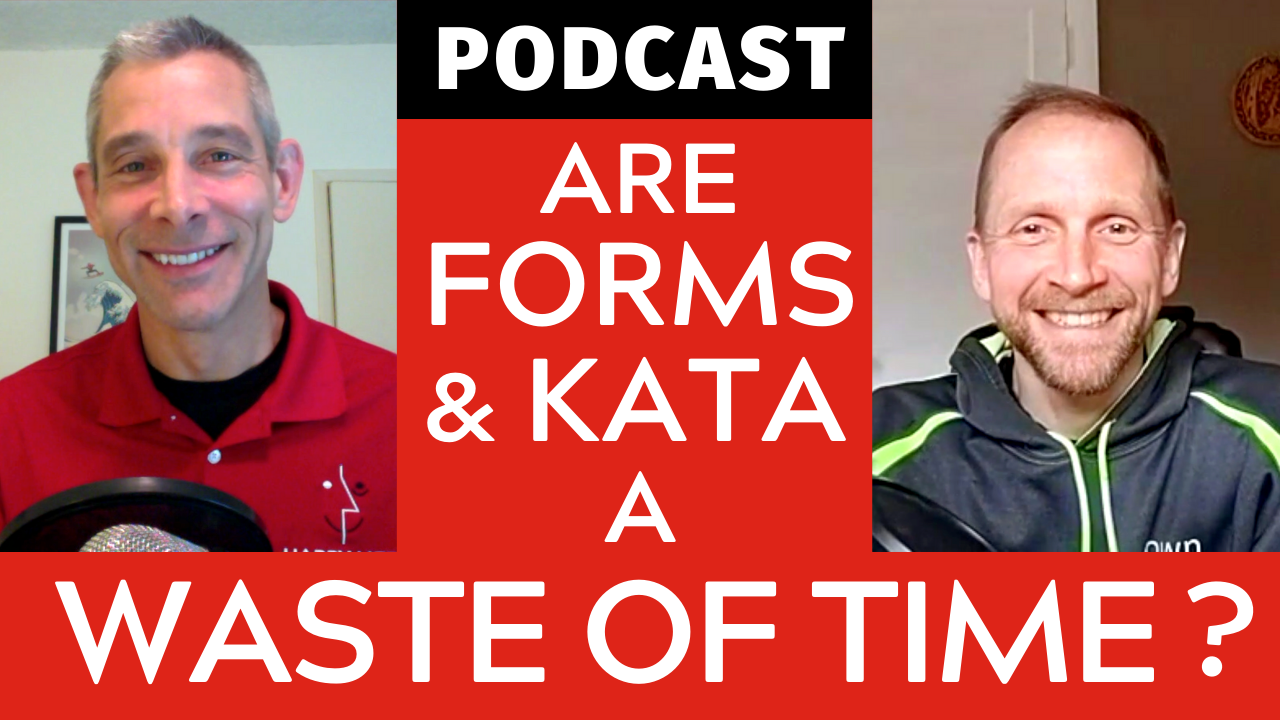
Guest Appearance: Are Forms/Kata a Waste of Time in Martial Arts? w/ Sensei Ando
I had the great pleasure of returning once more as a guest on Sensei Ando’s channel Happy Life Martial Arts. We had an amazing, and thought provoking discussion on martial arts forms training, solo training, and more. We even threw some virtual punches, and a shadow Heimlich maneuver was almost necessary. Check out the video for a great podcast.
Guest Appearance: - Episode #82
with Sensei Ando of Happy Life Martial Arts
I had the great pleasure of returning once more as a guest on my friend Sensei Ando’s channel Happy Life Martial Arts. We had an amazing, and thought provoking discussion on martial arts forms training, solo training, and more. We even threw some virtual punches, and a shadow boxing Heimlich maneuver was almost necessary. Check out the video for a great podcast.
I highly recommend following him on his YouTube channel, as well as his podcast. Even though he is famous enough now with over 249,000 subscribers, a few more can’t hurt!
You find more of Sensei Ando here:
Sensei Ando
Sensei Ando YouTube Channel

Our Brain on Solo Training
How our brain and body benefit from solo training in martial arts. But there are pitfalls too.
How our brain and body benefit from solo training in martial arts. But there are pitfalls too.

How to Train Martial Arts on Your Own
These times require us to innovate and adapt to the changes in our lives, routines, and day to day activities. For weeks many of us have been without a class to attend. The good news? We can still train martial arts without a class or partners, and continue to develop our skills and improve.
What does it take to make this happen? You can watch this video I made this week telling a story on why I had to learn to train myself in martial arts, or you can skip below and jump to the bullet points so you don’t have to wait any longer to train.
Either way, rest assured
These times require us to innovate and adapt to the changes in our lives, routines, and day to day activities. For weeks many of us have been without a class to attend. The good news? We can still train martial arts without a class or partners, and continue to develop our skills and improve.
What does it take to make this happen? You can watch this video I made this week telling a story on why I had to learn to train myself in martial arts, or you can skip below and jump to the bullet points so you don’t have to wait any longer to train.
Either way, rest assured whether you are the student, or your a parent of a child that trains a martial arts, I am here to help you navigate this process and I have plenty of experience with self-training to be able to give you advice. Keep training!
Randy
[special section for parents further down]
How to Train Martial Arts on Your Own
Routine
To be successful with training martial arts on your own, you MUST have a routine. This is the most important aspect of self-training, and even group class training. It is too easy to say “I’ll do it tomorrow.” Tomorrow turns into next week, and then next month. Set a schedule for your training times at times during the week you know you can adhere to.Agency
This block of time is yours, and it must have agency. It is not something that we allow to be swayed or taken away by trivial distractions [such as a binge watching session on Netflix]. We treat these blocks of time as sacred, and do not allow ourselves or others to sideswipe them. If we do, we will do it again and again and never train. So treat your own class, just like a scheduled group class at your gym, school, dojo.Place to Go
Try to find a place outside, in a garage, barn, basement, or a separate room in your house/apartment if you have one to spare, that can be used for your training. During these time blocks, this is your dojo/place of training. Other people are not in here unless they are training with you, and others know to leave you be during your session.Frequency
This is up to you, but it should be consistent from week to week. Try to start out with something similar to what you were doing at group classes. If you were training 2 hours per week, then try to set up two 1-hour blocks each week, or four 30-minute sessions instead. If you trained more than that, then add more slots in. If you trained more than one discipline, like my students who train mantis boxing and jiu-jitsu, then have separate blocks of time to focus on each. Again, consistency, agency, private space are all a priority, but this step is important to establish from the beginning as it helps reinforce ‘routine’.Plan of Attack
This is a critical stage and just as important as any of those above. We have to know what we are going to train. This is probably one of the largest failures we have going to a big box gym - “what do I do next” If I can find it, I’ll add a picture to this article later showing you some of my routines/schedules I built for myself years ago when I had no choice but to train alone. Have a log, notebook, where you set aside what you specifically are going to do for each session. Update it weekly.Family Unit
If you are at home with others during this time, have them join you and if they have no experience, you teach them. Teaching others is one of the best ways we get better. We learn what we know and do not know (do not worry, you do not have to have all the answers or know everything to show someone newer than you). This is such a powerful tool, you will be surprised how much it can help. If you are trying to train your kids - focus less on ‘teaching’ them, and more on doing. If they see you enjoying yourself and having fun, they will follow along. Forcing them is counter-productive. See below for more parent tips.Wear your Uniform
This may seem like an odd one at first glance, however, this has more significance than you may guess. The act of putting on our uniform, commits us mentally to the act of training. This is part of the discipline that you exhibit week after week showing up for class. Continuing this ritual on our own puts us in the same mindset and lets us not only commit to training, but keeps us on the rails as we stick to our planned training time. With that said, do not wear your uniform all the time. The act of putting it on, and taking it off when done, keeps that box cordoned off in our mind. We know when we wear it, that this is a sacred time that we need to respect for ourselves.
Parents
See everything above before reading this. Those items are still relevant and will help you in setting up a plan of action for your child.
Routine
I know I mentioned it above, but I can’t repeat this enough. No video games, movies, toys, etc can get in the way of ‘time to train’. These are hard and fast blocks and they should know they have to go to a certain place to train. Consistency is key, so if you are able to set the same time block aside for each day of training, this will be a big help to you in getting them to train. If it is arbitrary or day to day, it is difficult for any of us to become mentally engaged off the cuff.Videos
Use video training [preferably from their school/style] as ways to promote interest and learning. This can be part of the training block i.e., 15 minutes of watching lessons, and 30 minutes of training. As the parent, you may not know what they are working on in class, or where to focus, but asking for help from their teacher, can help you build a lesson plan for them. In some cases, the video may be useful throughout the entire session so it is good to have access to a screen so they can rewind or pause as needed (as long as it is not a game they switch too).
How Long Does My Child Train?
This is based entirely on age. The younger they are, the less time you should expect. A 10 to 12 year old might be good for an hour of training 3 or 4 times per week and have the discipline to stay engaged. A 5 year old however may only work in 15 to 20 minute blocks and need more frequency such as 6 to 8 blocks per week.
Ask for Help
If you need ideas, or direction, ask their instructor to help guide you, or provide a lesson plan for each week so it eases the process and all you have to worry about is the tips we mentioned in the beginning.Older Teaches Younger?
If you have siblings that all train together, this common purpose creates a strong bond where they can help one another get better. If you do not train yourself, it is important to sit back and allow them to teach one another. At times the eldest child will guide and teach, but the younger child may know something they do not, so it is important this is not authoritarian by the older sibling. Keep in mind the parent can become the inhibiting factor in these training session rather than a positive influence. Our job is to make sure they do not hurt one another, or get out of control, but otherwise we keep quiet and give them the autonomy to teach/train together. If they are mature and show positive results with this, then you can run test sessions where they are allowed to spar/roll with one another for short rounds of 3 minutes at a time.
Good luck!
I’ll add more tips as I think of them, but hopefully this is enough to get you started.

Are Head Hits in Boxing/MMA Good or Bad? The Truth...
Is getting hit in the head bad for us when we train in martial arts such as boxing, MMA, kickboxing, karate, muay thai, etc.??? Here is how I see it, and what I did to my students to make them train smarter. Being educated on the truth can keep us training safe for years to come.
Is getting hit in the head bad for us when we train in martial arts such as boxing, MMA, kickboxing, karate, muay thai, etc.??? Here is how I see it, and what I did to my students to make them train smarter. Being educated on the truth can keep us training safe for years to come.

Countering the Hip Toss
Ever been mistaken for a sack of potatoes? Do you dislike being dislodged from the earth you stand on, turned upside down and dropped on your head or back? Here’s a little tip to counter that nasty hip toss throw your opponent might try out of mistaken identity, or something more nefarious.
Ever been mistaken for a sack of potatoes? Do you dislike being dislodged from the earth you stand on, turned upside down and dropped on your head or back? Here’s a little tip to counter that nasty hip toss throw your opponent might try out of mistaken identity, or something more nefarious.

Cracking the Black: Thomas McNair
Back in 2012, a young man in his early 20’s walked into my school and signed up for classes. He was excited, highly motivated, and ready to train. He had a great attitude and when he was in class, he would work hard. The first few years saw him…
Thomas McNair - circa 15 - photo by Max Kotchouro
Back in 2012, a young man in his early 20’s walked into my school and signed up for classes. He was excited, highly motivated, and ready to train. He had a great attitude and when he was in class, he would work hard. The first few years saw him come and go from classes, consistency was holding him back from advancing beyond blue belt.
Eventually he dedicated himself for a stretch of time that he was able to bench up to green belt, and then he disappeared again. As time passed, he would show up for weeks at a time, coming to 5 or 6 classes per week, and training hard. He would recommit, only to bounce out 4 to 6 weeks later and resurface 3 or 4 months later.
This went on for a time, and it perplexed me. He was a kind soul, with a good sense of humor, and consistently helping other people when he was on the mats, and off. He worked at group homes assisting people unable to assist themselves. Always giving. He would recruit anyone that would listen, to come to classes with us; his friends, significant other, even his own mother (where’s my aleve…?). [inside joke that she’ll appreciate]
In mantis boxing, a majority will make yellow belt, and from there maybe half those will get to blue belt. It’s a lengthy journey, and not everyone can commit to it for years at a time to get there. So when someone makes it to green belt, the odds are greater that they will move through the ranks to black belt. This is not always the case of course, but green belt has many challenges in front of it. Someone has learned to survive as a white belt, honed their defense between yellow and blue belt, and is starting to finally get in stride and see the bigger picture of all these moving parts coming together, so they can begin to develop their own game, or art.
As a teacher, coach, guide on this journey for others, it is difficult to see someone get this far, and then drop off. So this time, I reached out to have a heart to heart and find out what was going on. What did I find? Nothing surprising from a man like Thomas. He was working long hours and almost every day of the week, driving himself into the ground helping others. And he was about to break.

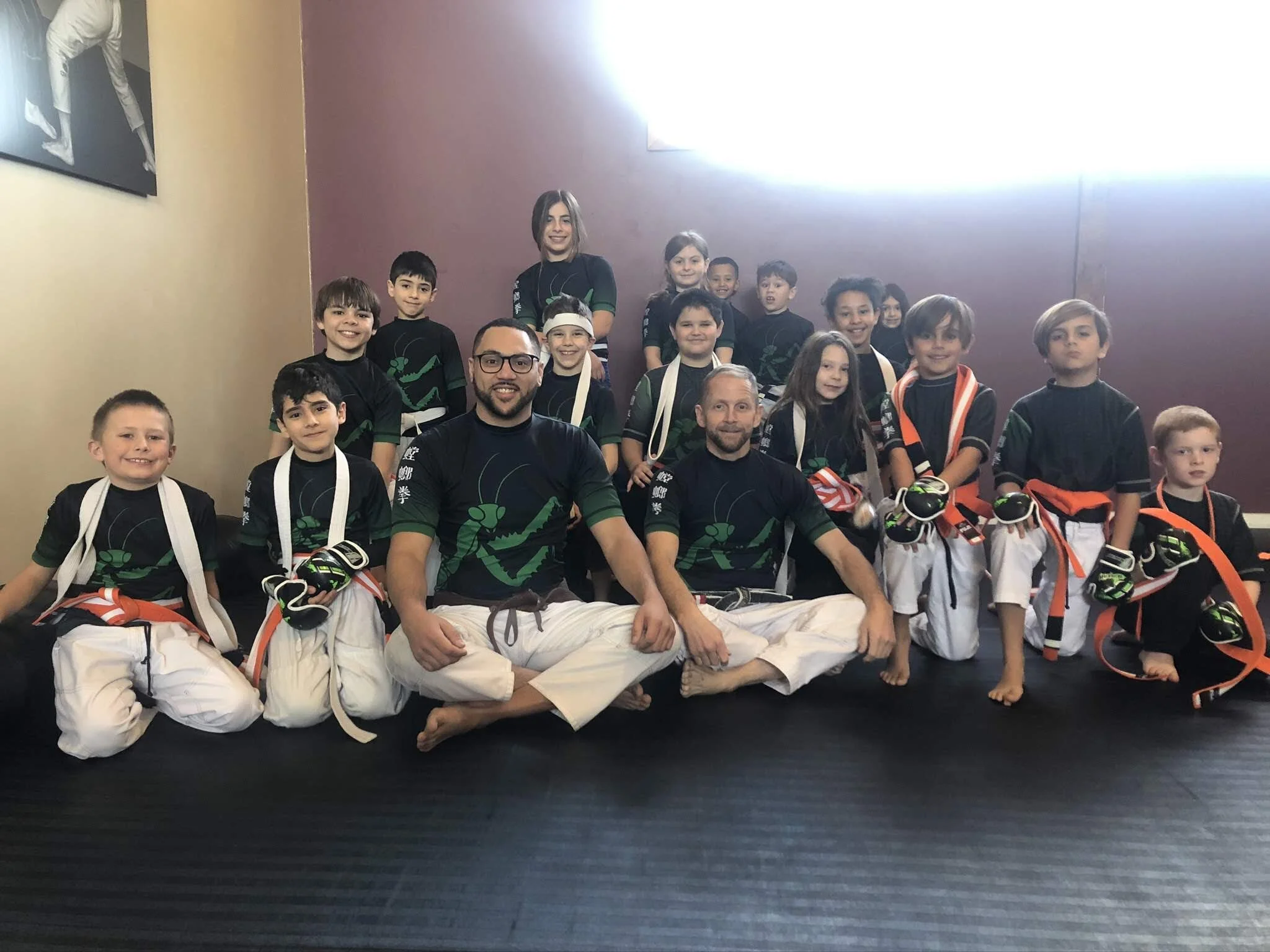
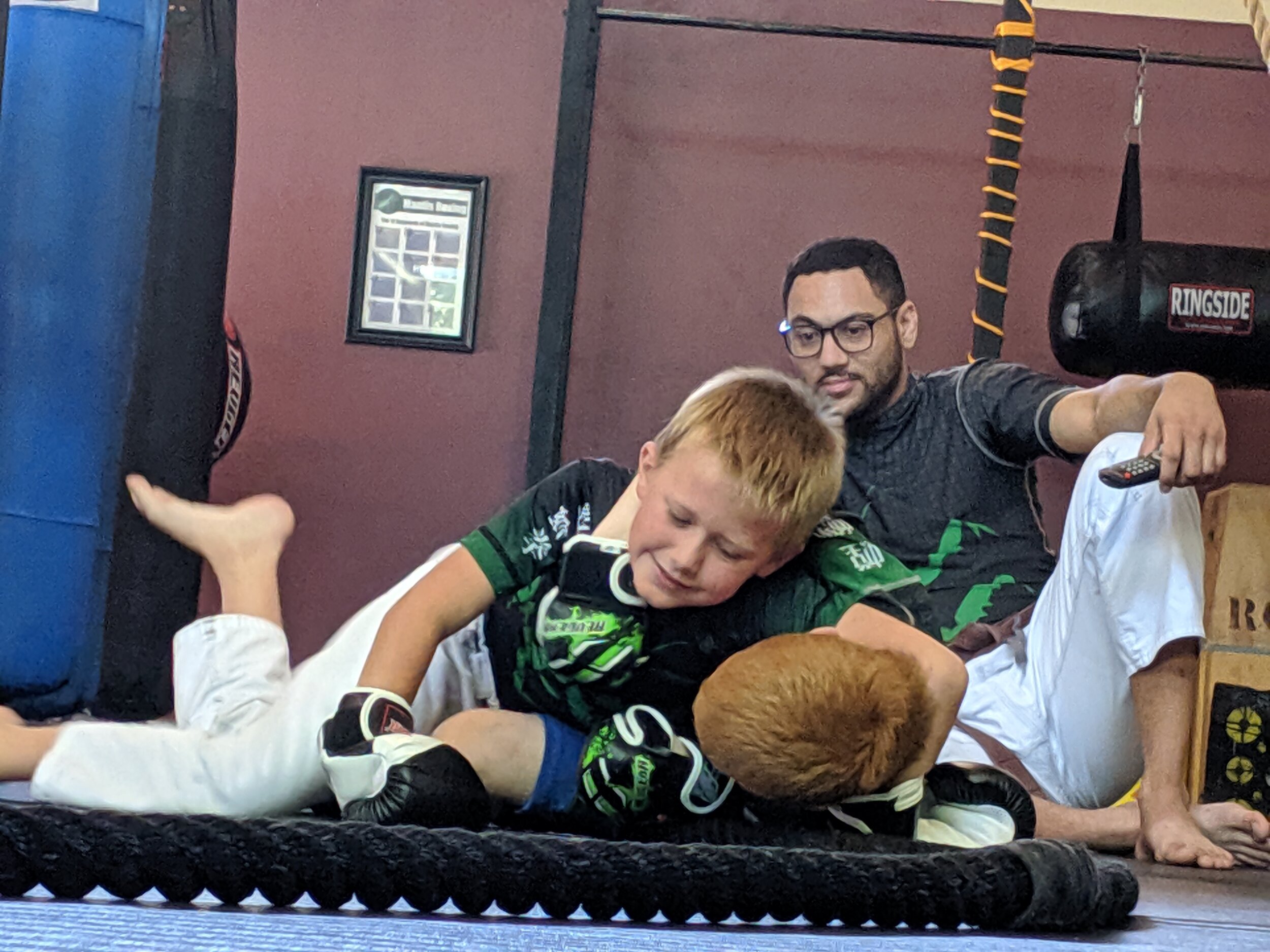





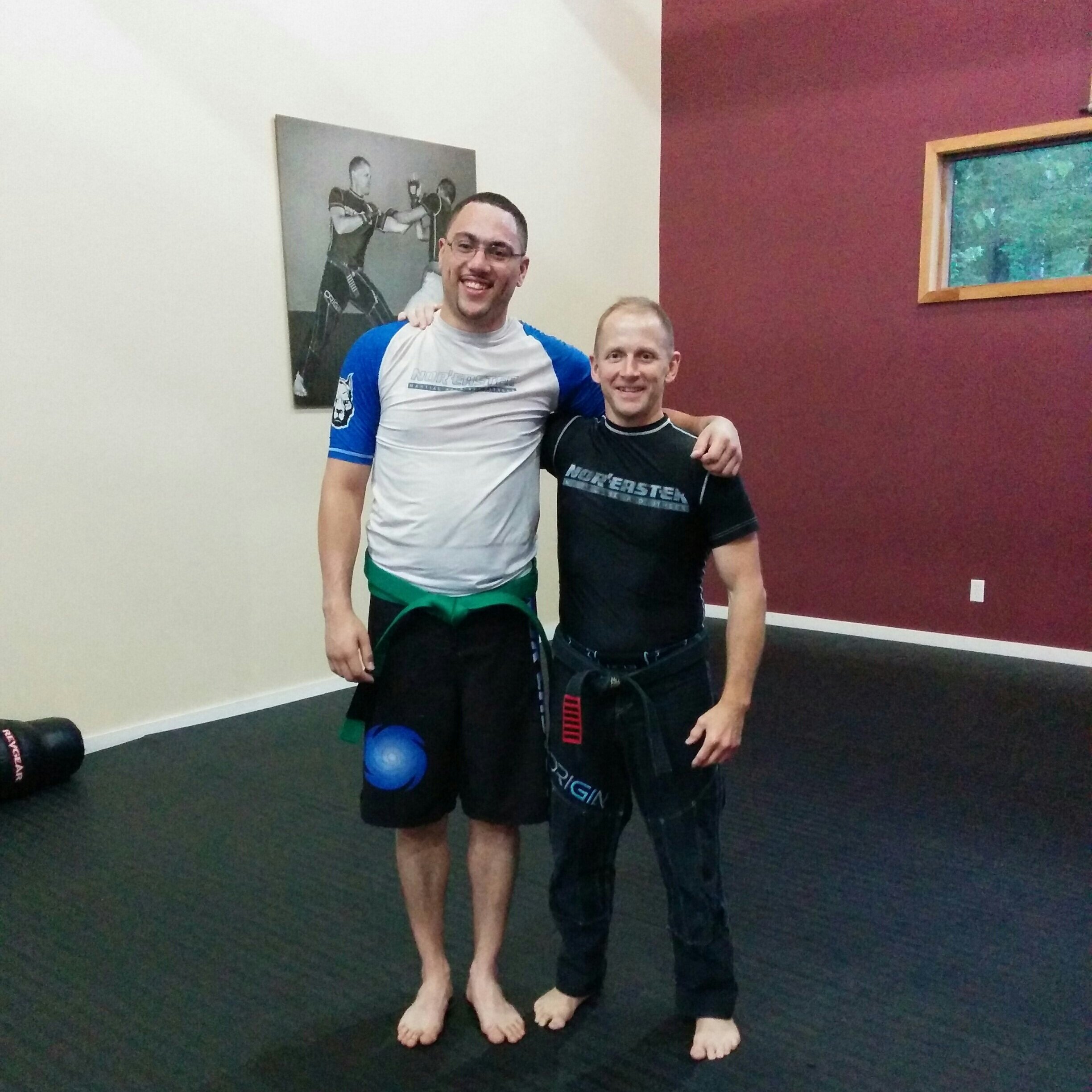


Thomas can do jobs I could never do. Character traits I lack, he seems to naturally possess. This makes him perfectly suited for service fields that require someone dedicate their time to helping others who cannot help themselves. It is a commendable and inspiring vocation. Unfortunately, he was burning out after years of taking care of others, but not himself. Thomas was ready to move to the woods and never talk to another human being again.
We had a long chat about his work, future plans, and where he stood with his training. I asked him if he still wanted to train, and continue on the journey. He said, yes. He wanted to get to black belt, and he really loved martial arts, but he didn’t know how to get back to a place where he could focus on it.
Backing up for a moment, a couple years prior I stopped teaching my kids program. I had burned out and my heart was more into teaching adults at the time. Having taught kids for years, I did not feel I was making an impact on their lives in a positive manner. In those 11 years, I had maybe 3 or 4 kids that successfully made the transition from the kids class to the adult class. I blamed myself for this failing, and decided to walk away for a while and focus strictly on my adult classes, which were doing far better by comparison.
So in our conversation, when Thomas and I were discussing where he was going next in life, I offered to restart the kids program if he would come on board as an instructor to help get it off the ground again. He could continue to help other people, something integral to his core, and simultaneously refocus on his training; taking it to the next level and bringing him a step closer to fulfilling his dreams.
I asked him to think it over, even though he was immediately excited and ready to jump in, just to ensure he was prepared to commit. He was all in, and came back to me with his true path - to become a martial arts instructor as his career.
Since then, Thomas has applied himself diligently to his craft. He has grown not only as a mantis boxer and jiu-jitsu grappler, but as a person. He has matured immensely, evolving from a wanderer, a part-time student of combat sports; to a humble, competent, and effective instructor, coach; and dedicated martial artist. In that transition his skills elevated to a whole new magnitude, to which he later confessed that he had no idea how significantly that - consistency, dedication, perseverance, and effort - would benefit his growth as a fighter, warrior, and human being.
As a coach and teacher, watching these transformations is what makes it all worthwhile. It has been an honor to watch from the sidelines as Thomas stepped up his game and transformed into something he could previously only imagine. He is now, one of four black belts in mantis boxing by my hand. Congratulations, Thomas.

Thomas McNair promoted to Black Belt in Mantis Boxing by Randy Brown on Saturday, December 7, 2019.
photos by Max Kotchouro

How to Escape the Clinch - Continued
Here is another follow-up to the videos we shot in LA with Sensei Ando last year (May 2019) as we catch up with the backlog of footage. In this one, Thomas and I will cover the Reverse Hook and how to use it to gain control of the clinch, along with options for follow-up such as: crushing knee, wicked knee, and hanging hook.
Here is another follow-up to the videos we shot in LA with Sensei Ando last year (May 2019) as we catch up with the backlog of footage. In this one, Thomas and I will cover the Reverse Hook and how to use it to gain control of the clinch, along with options for follow-up such as: crushing knee, wicked knee, and hanging hook.
You can find the videos with Sensei Ando here:

Size Matters in BJJ!!! - Part 3 - Breaking Closed Guard
Here's one of my favorite closed guard breaks, and why it is horrible for taller vs. smaller. If you do use this BJJ escape, here is the answer to 'why isn't my closed guard break working?' Enjoy this next installments in our Size Matters series. This is a must see if you are trying to break a smaller grapplers closed guard.
Here's one of my favorite closed guard breaks, and why it is horrible for taller vs. smaller. If you do use this BJJ escape, here is the answer to 'why isn't my closed guard break working?' Enjoy this next installments in our Size Matters series. This is a must see if you are trying to break a smaller grapplers closed guard.